
 Why your ears resist depth, and how patient equalisation opens the door to deeper, calmer dives.

Equalising Without Fear: Pressure, Ears, and Going Gently Deeper
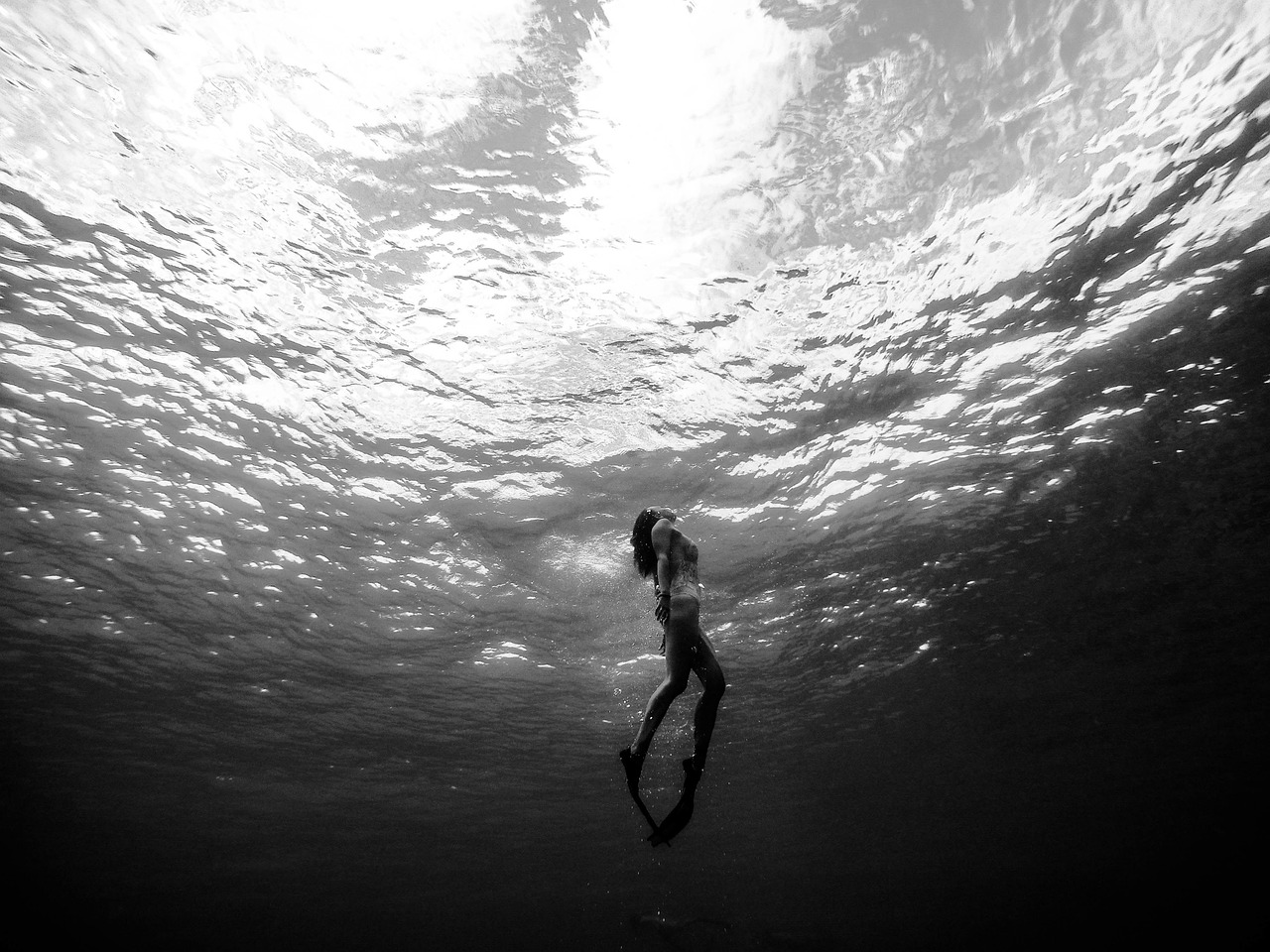
Almost everyone who tries freediving hits the same wall, and it is not a wall of fitness or lung capacity. It is a wall of pressure, felt as a pinch behind the nose, a dull ache in the ears, or a sudden refusal somewhere around three to five metres. The good news is that this wall is not a limit. It is a skill, and like any skill it can be learned slowly and without drama.
As you descend, water pressure squeezes the air spaces in your body, most noticeably the middle ear. To keep the eardrum from being pushed inward, you need to add air to that space through the Eustachian tube, the narrow passage connecting the back of your throat to the middle ear. That is equalisation, and it is the single most important technique in shallow freediving.
The Gentle Methods That Actually Work
The simplest equalisation is the Valsalva manoeuvre: pinch your nose and blow gently against it. It works, but it is forceful, it raises pressure in the chest, and it becomes harder as you go deeper. A better habit is the Frenzel technique, in which you trap a small pocket of air in your mouth and throat, close off your glottis, and use your tongue as a piston to push that air up into the Eustachian tubes. It sounds fiddly on land and it is, but once it clicks it takes almost no effort and works far deeper than a Valsalva blow.
Some divers also use the soft palate technique, lifting the back of the tongue and the soft palate to open the tubes without pinching the nose at all. This is the gentlest of the three and worth learning early, because it can be done continuously during a descent.
Whichever method you use, the principle is the same: equalise early and often. Do not wait for the squeeze to arrive. Equalise at the surface, on the first metre, and every metre after that. If you feel pain, you have waited too long, and the correct response is to ascend slightly, equalise gently, and try again or end the dive.
The Things That Block You, and How to Unblock Them
Equalisation fails for reasons that have nothing to do with technique. A cold, a blocked nose, or even mild congestion can seal the Eustachian tubes, and no amount of practice will push through it. If you are even slightly congested, dive shallow or not at all. Diving on a blocked ear is how people rupture eardrums, and a ruptured eardrum in cold water is a serious situation.
Tension is the other quiet saboteur. A stiff neck, a clenched jaw, and shallow breathing all tighten the muscles around the throat and make the tubes harder to open. Relax your jaw, tilt your head slightly, and breathe slowly before your dive. Some divers find that looking straight ahead rather than down at the line helps, because it opens the neck and throat.
Practice on land first. Sitting comfortably, pinch your nose and try the Frenzel motion until you can feel both ears pop. Do it ten times a day for a week and it becomes automatic. Then take it to the water, shallow and unhurried, and dive only as deep as stays comfortable. Depth is not a goal to chase. It is a place you arrive at when everything else is already working.
The divers who go deepest are rarely the ones who push hardest. They are the ones who learned to listen to their ears, equalise before they needed to, and turn back without regret on the days their body said no.