
 Learning to interpret wind, swell, and sky before your paddle hits the water is the single most useful skill a coastal kayaker can develop.
Sea Caves and Rock Gardens: Kayaking the Coast's Hidden Architecture
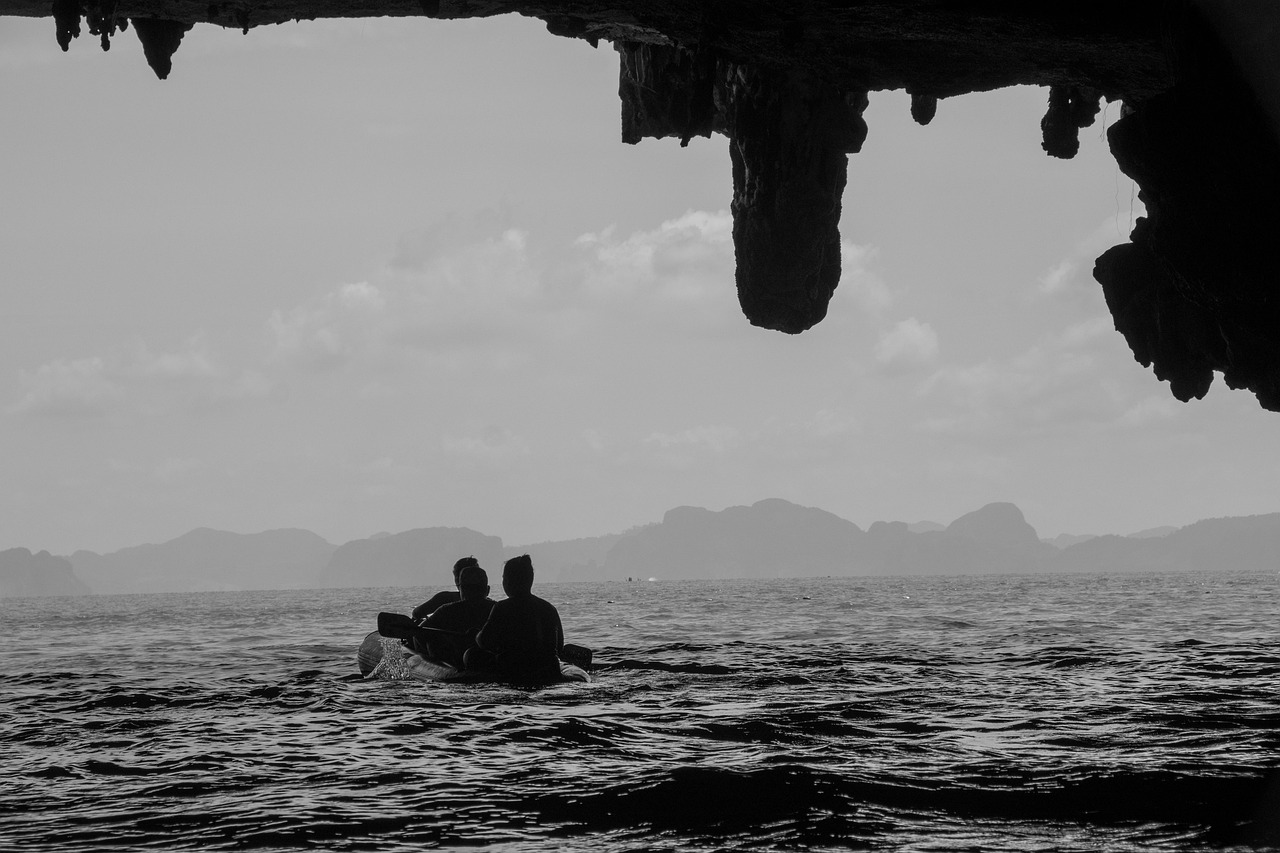
From a distance, a rocky coastline looks like a wall. Up close, it is a honeycomb of gaps, caves, arches, and channels, carved by waves and time into a maze that a kayak can slip through but a boat cannot. This is the coast at its most intimate, and exploring it is one of the great pleasures of paddling. It is also the place where a calm day can turn serious in seconds, so the approach matters as much as the enthusiasm.
The first thing to understand is that caves and rock gardens are not separate from the sea. They are the sea, concentrated. Swell that passes harmlessly under your hull in open water can surge into a cave mouth and turn a quiet chamber into a washing machine. The same is true of rock gardens, where water that has nowhere to go will pile up against a cliff and rebound unpredictably.
Reading the Entrance Before You Commit
Before you paddle into any narrow feature, stop outside it and watch. Count the sets of swell. Note how far the water surges up the walls and how long the lull lasts between waves. If the surge reaches the ceiling, or if the lull is too short to paddle in and out comfortably, the feature is not for today. There is always another day.
Look at the water colour and the texture. Green, clear water over a sandy bottom is a good sign. Foam and turbulence at the entrance usually mean a submerged rock or a shallow ledge that will reflect waves back at you. Look for the deepest, calmest line in, and be ready to back out the way you came, because many caves have no exit at the far end.
Never enter a cave alone, and never enter one without a light. Phones are not lights for this purpose. A proper waterproof torch, ideally one per paddler, reveals the true shape of the cave and warns you of low ceilings and shallow rocks. Helmets are worth wearing in rock gardens, where a swell can lift you toward an overhang you did not see.
Technique in Tight Places
Inside a cave or a narrow channel, you lose the luxury of long, powerful strokes. Short, quick strokes, sometimes just a sculling motion with the blade, give you control without banging the paddle on rock. Keep your weight centred, keep your speed low, and use your body to steer as much as your blade.
If a set of swell catches you in a tight spot, do not fight it. Brace into the wave, let it pass, and use the following lull to reposition. Turning broadside to a surge in a narrow channel is how kayaks get pinned, so keep your bow or stern toward the moving water whenever you can.
Respect the wildlife as well as the rock. Caves and shaded overhangs are often resting places for seals, cormorants, and roosting seabirds. Keep your distance, keep your voice down, and leave before they feel the need to flee. A colony flushed into the water by a careless paddler loses valuable energy, and nesting birds may abandon eggs.
The reward for all this caution is a coastline that most people never see: ceilings dripping with reflected light, walls hung with anemones and sponges, the boom and hiss of swell echoing in a chamber you have entirely to yourself. Paddle in slowly, look up, and let the scale of the place settle over you. Then paddle out the way you came, and leave it as you found it.